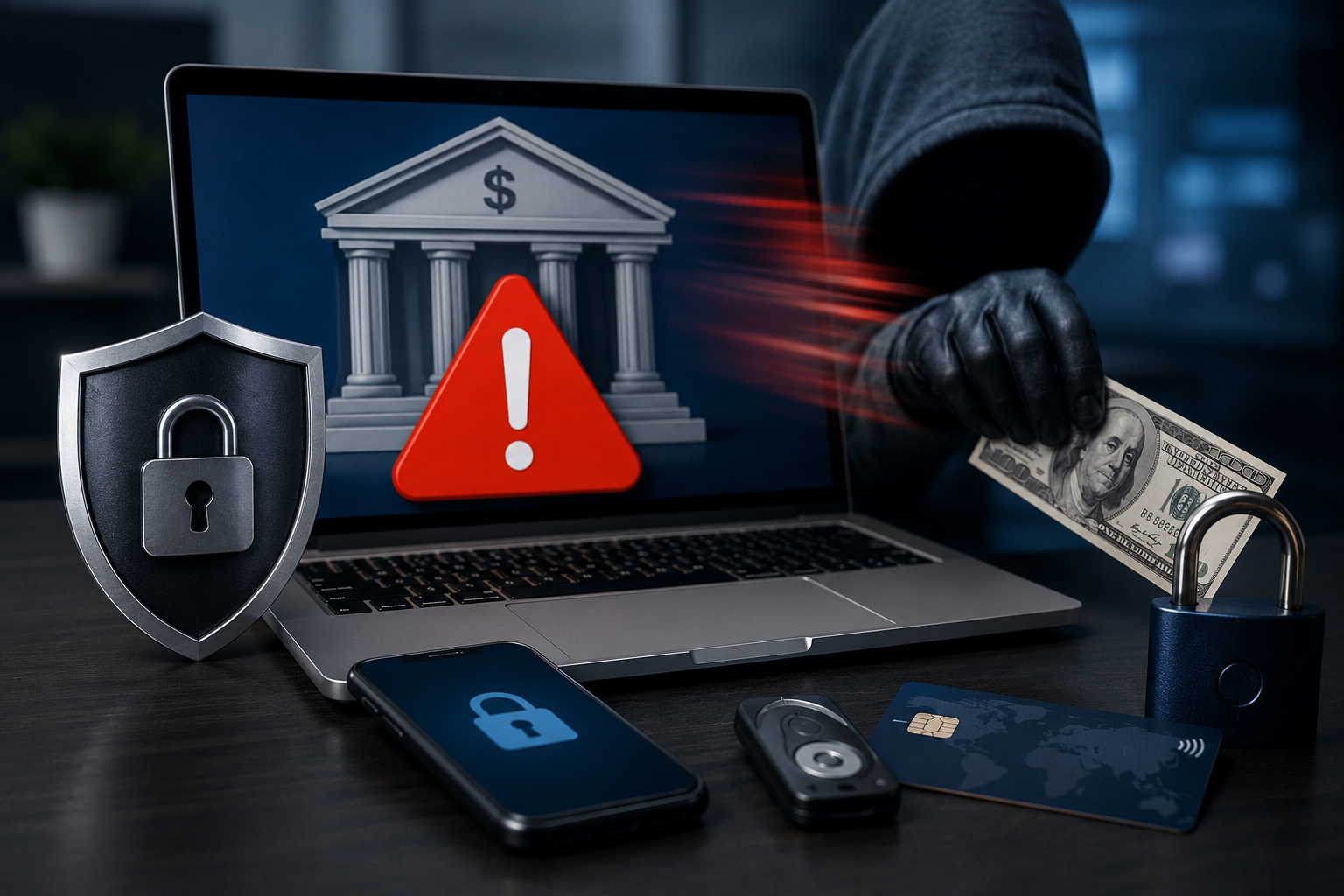
Most business owners assume that if criminals gain access to their bank account and steal money, the bank will simply reimburse the loss.
Unfortunately, that assumption can be costly.
Business bank accounts typically do not have the same consumer protections that personal accounts receive. If a cybercriminal successfully transfers money out of a business account, recovering those funds can be difficult—and in some cases, impossible.
As online banking fraud continues to increase, every business owner should understand the risks and take proactive steps to protect their accounts.
Why Business Accounts Face Greater Risk
Personal banking customers often benefit from stronger legal protections when unauthorized transactions occur. Business accounts, however, operate under different rules.
Banks expect business owners to implement appropriate security measures and monitor account activity regularly. If fraud occurs and proper safeguards were not in place, reimbursement may not be guaranteed.
That means prevention is often your best defense.
Three Critical Steps to Protect Your Business
1. Enable Available Bank Security Features
Many banks offer powerful fraud prevention tools, but they are not always activated by default.
Contact your bank and ask about these security features:
- Multifactor Authentication (MFA): Requires a second verification step in addition to a password.
- Real-Time Transaction Alerts: Receive notifications whenever transactions exceed a specified amount, such as $100.
- Positive Pay: A fraud prevention service that verifies checks against records of checks your business has issued.
- Dual Approval for Wire Transfers: Requires two authorized individuals to approve outgoing wire transfers.
These tools can significantly reduce the likelihood of unauthorized transactions.
2. Use Dedicated Devices for Banking
One of the most overlooked security practices is separating banking activities from everyday internet use.
For better protection:
- Conduct online banking only on secure, business-designated devices.
- Avoid using banking devices for email, social media, web browsing, or downloading files.
- Keep operating systems, browsers, and security software updated.
The fewer activities performed on a banking device, the lower the risk of malware or credential theft.
3. Review Your Insurance Coverage
Many business owners are surprised to learn that standard business insurance policies may not cover losses from cyber theft or fraudulent transfers.
Review your policies and discuss the following with your insurance provider:
- Whether cybercrime and financial fraud are covered.
- Available cyber liability or cyber fraud endorsements.
- Coverage limits and exclusions that may apply.
Cybercrime losses can be substantial, and claims frequently reach tens or even hundreds of thousands of dollars. Understanding your coverage before an incident occurs can help prevent unpleasant surprises later.
What to Do Today
Don't wait until after a fraudulent transaction occurs to discover gaps in your protection.
Take a few minutes today to:
- Call your bank and review available fraud prevention features.
- Verify that multifactor authentication is enabled for all users.
- Confirm who has authority to approve transfers and payments.
- Review your insurance coverage for cyber fraud and financial theft.
- Ensure online banking is conducted only on secure, dedicated devices.
Final Thoughts
Cybercriminals increasingly target businesses because business accounts often contain larger balances and may have fewer protections than personal accounts. While banks provide valuable security tools, protecting your business ultimately requires a combination of strong account controls, secure technology practices, and appropriate insurance coverage.
A simple phone call to your bank today could help prevent a costly financial loss tomorrow.
Quick Action Checklist
✓ Enable multifactor authentication on all banking accounts
✓ Set up real-time transaction alerts
✓ Ask about Positive Pay services
✓ Require dual approval for wire transfers
✓ Use dedicated devices for banking activities
✓ Review cyber fraud insurance coverage
✓ Verify your bank's fraud response procedures
Protecting your business starts with understanding the risks—and taking action before criminals have the opportunity to strike.

.png)