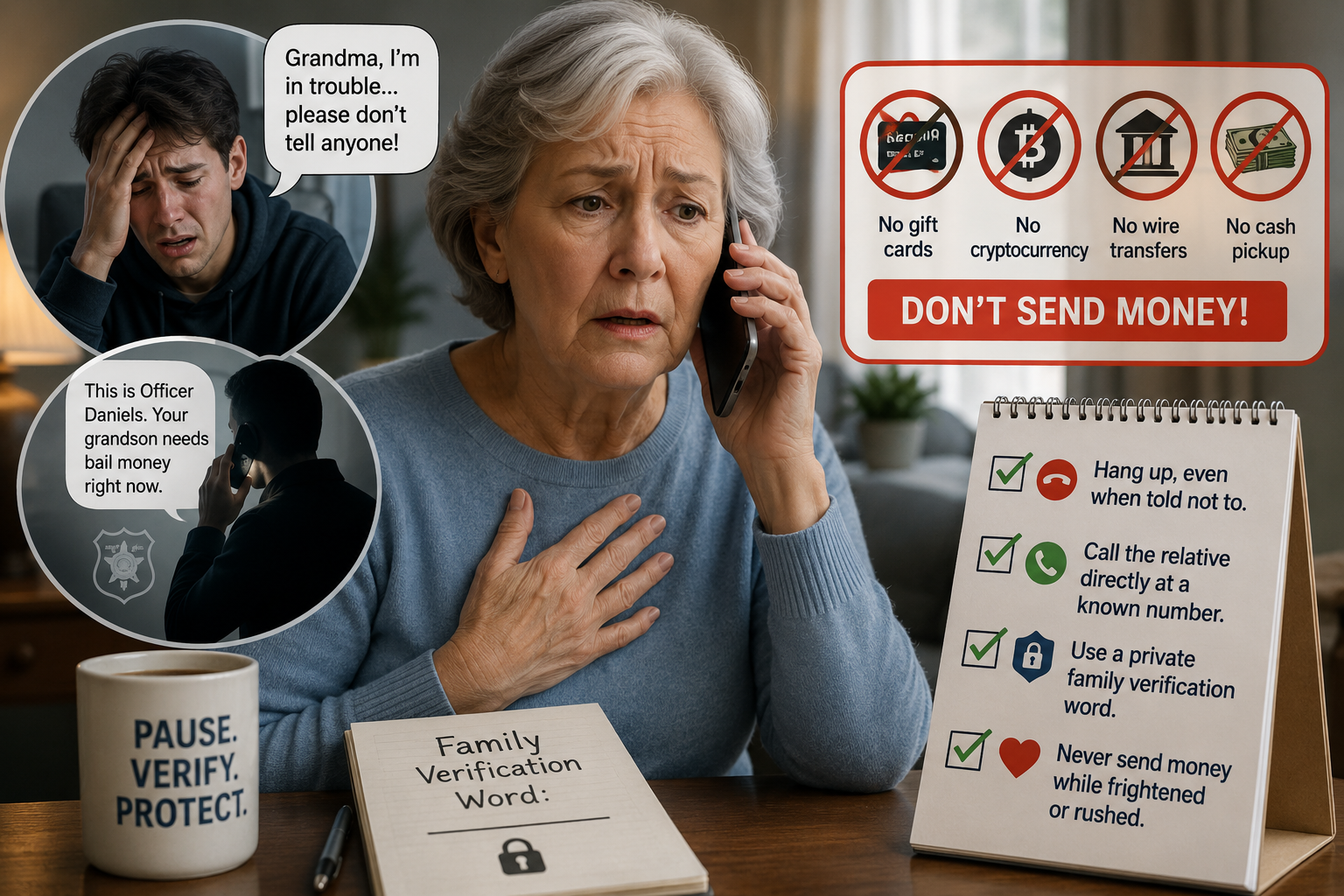
A caller sounds like your child or grandchild. They say theyhave been arrested, injured, stranded, or involved in an accident. They beg younot to tell anyone and ask for money right away. The voice may sound familiar,but that does not mean the call is real.
How the Scam Creates Pressure
The caller tries to keep you frightened and isolated. Theymay hand the phone to someone pretending to be a police officer, lawyer,doctor, or bail agent. The story is designed to prevent you from stopping tothink or contacting another family member.
Why a Familiar Voice Is Not Proof
Artificial intelligence can create a voice that resembles areal person from a short recording found online. Criminals may also usepersonal details from social media to make the story sound believable. Acorrect name, school, city, or family detail is not enough to confirm identity.
Use a Family Verification Plan
Choose a private family word or question that is not postedonline. When an emergency call arrives, ask for that word or answer. Then endthe call and contact the person directly using a number you already have. Youcan also call another relative who would know whether the emergency is real.
Never Follow Secret Payment Instructions
Be especially suspicious of requests for gift cards,cryptocurrency, wire transfers, cash pickup, or money sent through a stranger.These payment methods are difficult to reverse. A legitimate official will notrequire you to keep a payment secret from your family or bank.
Safety Checklist
✓ Hang up, even when the caller tells you not to.
✓ Call the relative directly at a known number.
✓ Create a private family verification word.
✓ Never send money while you are frightened or rushed.
A Calm Final Reminder
Caring about family can make an emergency story feelimpossible to ignore. Verification is not a lack of trust; it is an act ofprotection. A genuine loved one will understand why you paused to check.


.png)