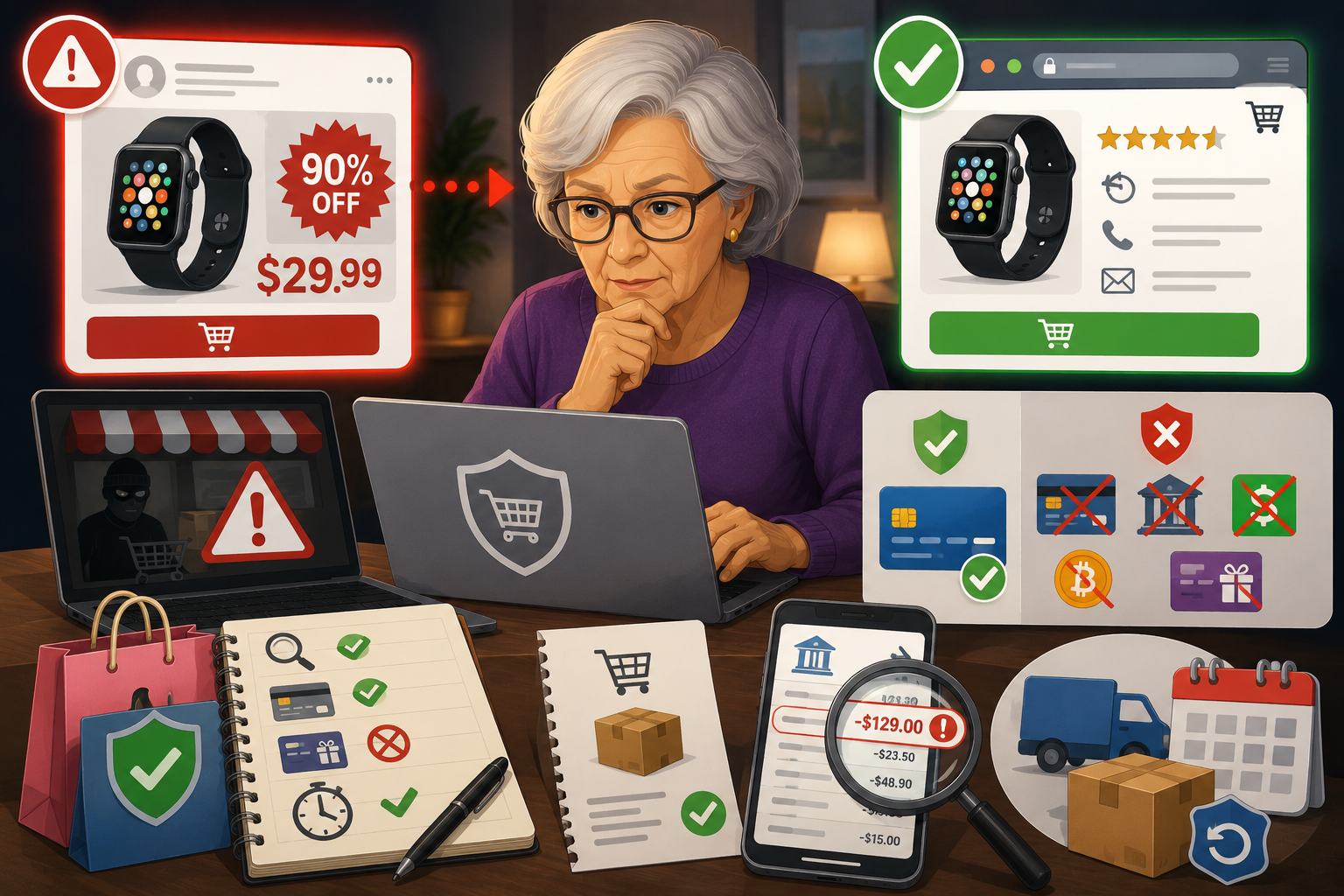
Online shopping is convenient, but criminals also createfake stores and advertisements that look professional. They may offer popularproducts at unusually low prices, collect payment, and send nothing. Others mayuse the checkout page to steal card information.
Look Beyond the Advertisement
An advertisement on social media or in search results is nota guarantee that a seller is trustworthy. Before buying, search for thebusiness name along with words such as “complaint,” “review,” or “scam.” Checkwhether the site lists a real return policy, working contact information, andclear shipping terms.
Be Careful With Prices That Make No Sense
A deep discount can be legitimate, but an expensive productoffered for a tiny fraction of its normal price deserves extra checking. Fakestores use urgency, countdown clocks, and “only one left” notices to pushbuyers into acting before they investigate.
Choose Payment Methods With Protection
Credit cards often provide stronger dispute options thandebit cards, bank transfers, cash apps, cryptocurrency, or gift cards. Neverpay a seller who insists that you buy gift cards and send the card numbers orphotographs. Once those numbers are shared, the money can be taken quickly.
Keep Records and Watch Your Account
Save the order confirmation, product description, sellerinformation, and expected delivery date. Review card statements for unfamiliarcharges. If an item never arrives or is very different from what was promised,contact the seller and your card issuer promptly.
Safety Checklist
✓ Research unfamiliar sellers before entering payment information.
✓ Use a credit card when practical.
✓ Never pay a business or government agency with gift cards.
✓ Avoid purchases made under countdown pressure.
A Calm Final Reminder
The safest online purchase is one you have time to check. Afew minutes of research can prevent weeks of trying to recover money or replacea compromised card.

.png)