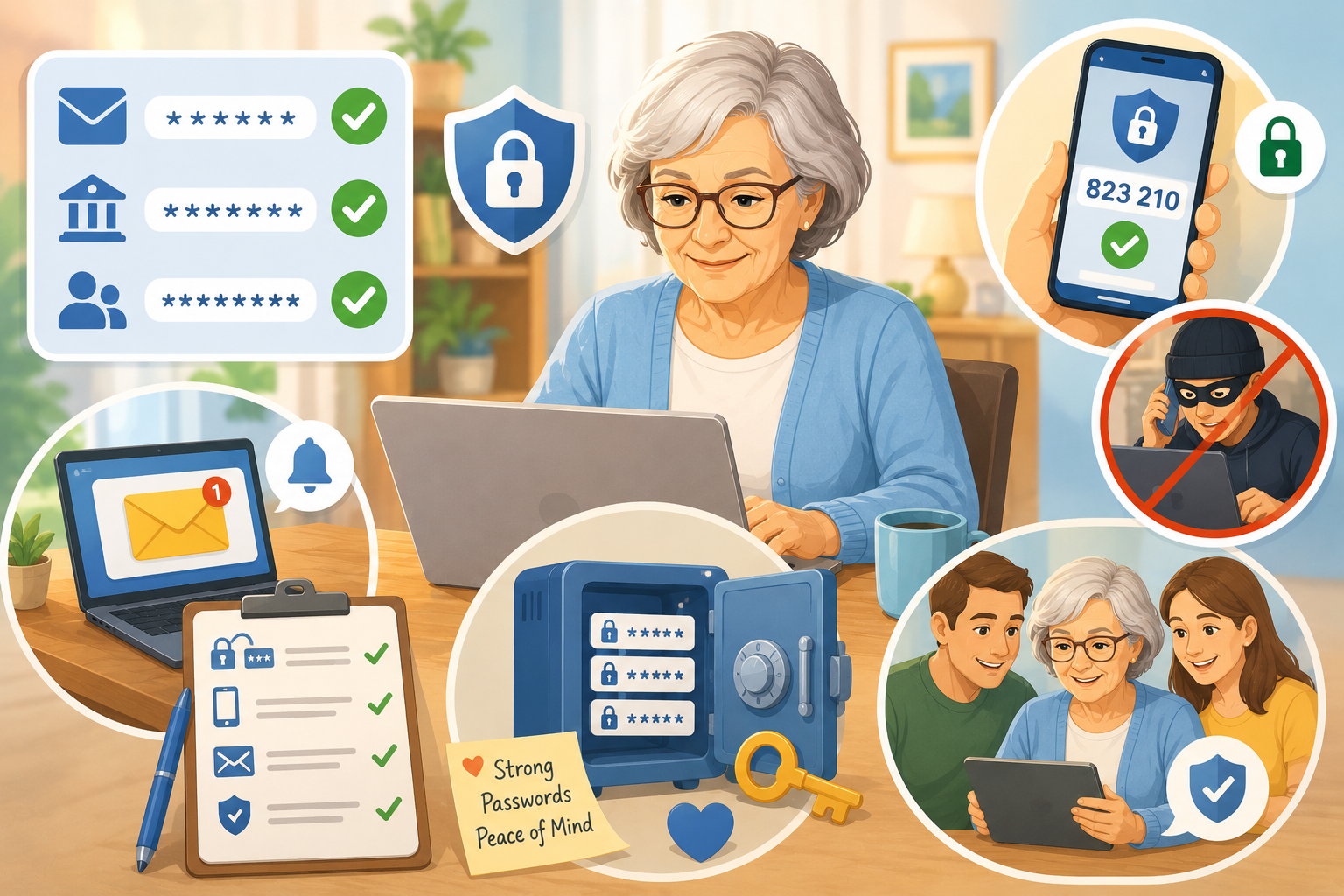
Your email account, bank login, and social media profilescan reveal a great deal about your life. Criminals may try to enter theseaccounts using stolen passwords, fake login pages, or verification codes theytrick you into sharing.
Use a Different Password for Important Accounts
When the same password is used in several places, one stolenpassword can unlock multiple accounts. Use a long, unique password for email,banking, shopping, and social media. A password manager can create and storestrong passwords so you do not have to remember every one.
Turn On Two-Step Verification
Two-step verification adds another check after the password,such as an app prompt or one-time code. It is sometimes called two-factorauthentication or multi-factor authentication. Never read a verification codeto someone who contacts you. The code is often the final key a criminal needs.
Protect Your Email Account First
Email is commonly used to reset other passwords, so itdeserves special protection. Use a unique password, add two-step verification,confirm that the recovery phone number and email address are yours, and reviewrecent sign-in activity.
Respond Quickly to Warning Signs
Unexpected password-reset messages, unfamiliar purchases,new account alerts, or missing mail can signal trouble. Change affectedpasswords through official websites, contact financial institutions, and reviewcredit reports when personal identity information may have been exposed. Keepnotes about dates, calls, and actions taken.
Safety Checklist
✓ Give every important account a unique password.
✓ Use a password manager from a trusted provider.
✓ Never share a verification code with an unexpected caller.
✓ Review account alerts instead of ignoring them.
A Calm Final Reminder
Good account security does not require technical expertise.A few dependable habits—unique passwords, two-step verification, and carefulhandling of codes—can make your accounts much harder to steal.

.png)