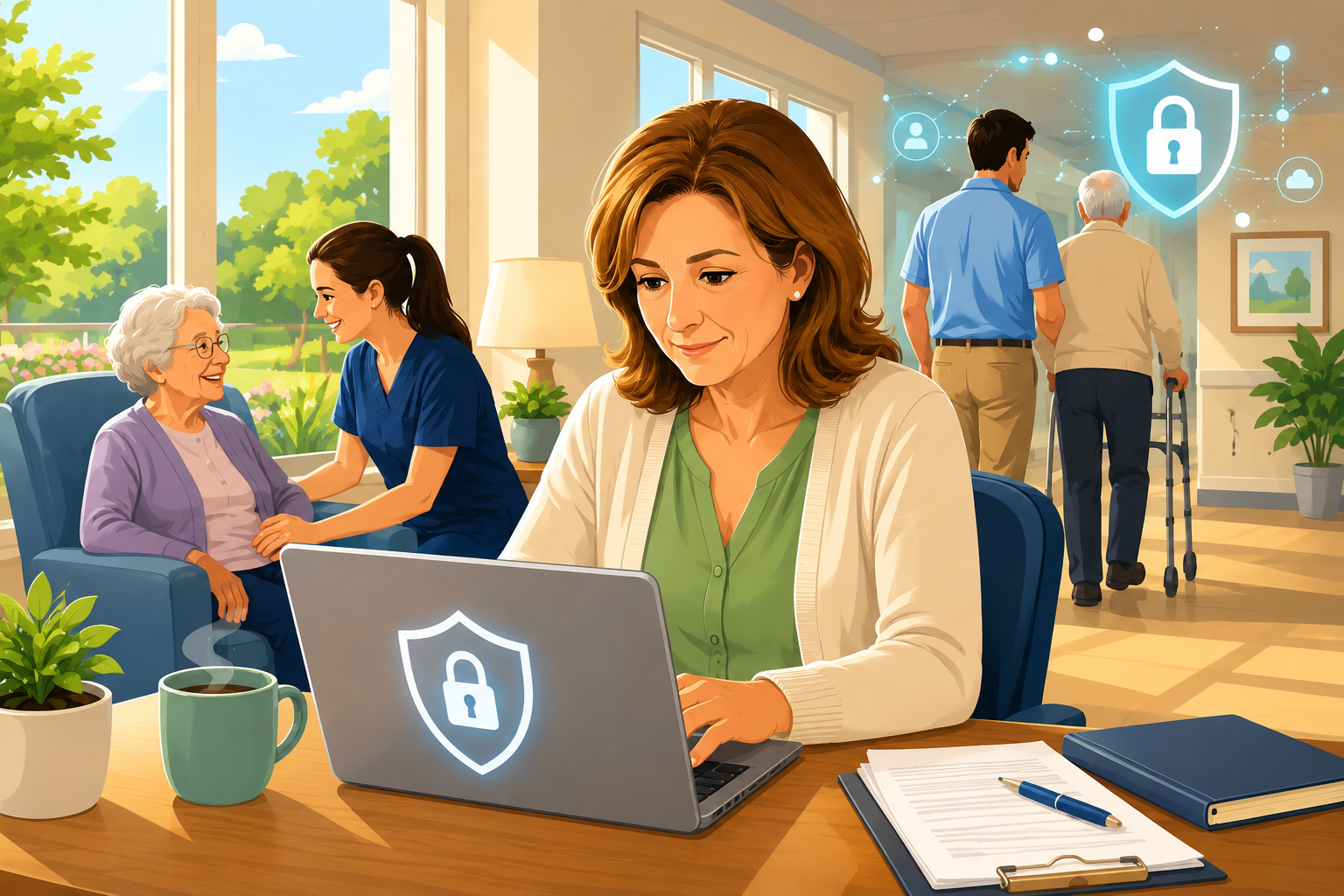
School’s out, and for many people, the workday suddenly looks very different.
Maybe your team is adjusting schedules to accommodate childcare. Maybe staff are working remotely more often. Maybe there are more interruptions, more distractions, and fewer uninterrupted moments to focus.
Summer changes routines — and cybercriminals know it.
While your staff are adapting to a new pace, hackers are adapting right alongside them.
And unfortunately, senior care organizations are especially vulnerable during times like these.
This Isn’t a Normal Workday
In assisted living and senior care, your team is already balancing a hundred priorities every day.
Resident care.
Family communication.
Staffing challenges.
Compliance requirements.
Insurance demands.
Technology and cybersecurity often become just one more thing competing for attention.
During summer months, that pressure increases. People move faster. Attention gets split. Small details become easier to miss.
That’s exactly what cybercriminals are counting on.
Most phishing emails today don’t look suspicious at first glance. They often appear routine:
- An invoice
- A shared document
- A password reset notice
- A message from a vendor
- A quick request from leadership
The goal isn’t to trick someone who is carefully analyzing every email.
The goal is to catch someone in the middle of a busy moment.
One click while distracted can open the door to much larger problems.
The Real Problem Isn’t the Click
When someone clicks a phishing link or downloads a malicious attachment, the issue rarely stops there.
That one action can give attackers access to:
- Resident information
- Email accounts
- Financial systems
- Cloud platforms like Microsoft 365
- EHR systems
- Internal documents and shared files
Because today’s systems are deeply connected, a single compromised account can quickly spread across the organization.
In senior care environments, that creates more than just technical problems.
It can disrupt operations, delay care, damage family trust, and create serious HIPAA and compliance concerns.
By the time leadership realizes something is wrong, the damage is often already growing.
That’s why cybersecurity in senior care isn’t just about protecting computers.
It’s about protecting resident safety, operational continuity, and the trust families place in your organization every day.
Why “Just Be More Careful” Isn’t a Strategy
It’s easy to assume the answer is simply telling staff to slow down and pay closer attention.
But real life doesn’t work that way.
Your employees are moving quickly because they care deeply about residents and families. They are juggling responsibilities, responding to urgent situations, and trying to keep operations running smoothly.
No team can operate with perfect focus every moment of every day.
That’s why strong cybersecurity isn’t about expecting perfection from people.
It’s about building systems that reduce the impact of inevitable human mistakes.
What Protection Actually Looks Like
The most effective cybersecurity programs are designed for real-world work environments — especially in healthcare and senior care settings where interruptions are constant.
That means putting guardrails in place that help contain risk before it spreads.
Some of the most important protections include:
Multi-Factor Authentication (MFA)
Even if a password is stolen, MFA helps prevent unauthorized access.
Email Filtering & Anti-Phishing Protection
Suspicious emails can be flagged or blocked before they ever reach your staff.
Secure Backups & Disaster Recovery
If ransomware occurs, recovery becomes possible without catastrophic downtime.
Staff Security Awareness Training
Simple, ongoing education helps employees recognize red flags without overwhelming them with technical jargon.
Access Controls & Unique Passwords
Limiting access reduces how far an attack can spread if an account is compromised.
Ongoing Monitoring & Threat Detection
Early detection can stop small issues from becoming organization-wide emergencies.
None of these safeguards rely on employees being perfect.
They are designed to support busy teams working in fast-moving environments.
Summer Doesn’t Create Risk — It Exposes It
The truth is, these vulnerabilities already exist year-round.
Summer simply makes them easier to overlook.
And for senior care organizations, the stakes are too high to assume “it probably won’t happen to us.”
Ransomware groups increasingly target healthcare and assisted living providers because they know operations are highly sensitive and downtime creates pressure to pay quickly.
The question isn’t whether your team is working hard enough.
The question is whether your organization has the right protections in place before something happens.
A Simple Question to Ask Yourself
If someone on your team clicked the wrong link this afternoon:
- Would the issue stay contained?
- Would you know immediately?
- Would resident care continue uninterrupted?
- Would your cyber insurance requirements still be met?
- Would you feel confident explaining your protections to families or regulators?
If those answers feel uncertain, now is the right time to take a closer look.
Because protecting resident trust starts long before an incident occurs.
And you shouldn’t have to navigate cybersecurity and compliance alone.
At BounceBack Solutions, we help Minnesota senior care and assisted living organizations strengthen cybersecurity, improve HIPAA readiness, and reduce operational risk — without overwhelming your staff with technical complexity.
You focus on caring for residents.
We help protect everything behind the scenes that keeps that care running safely and securely.
.png)