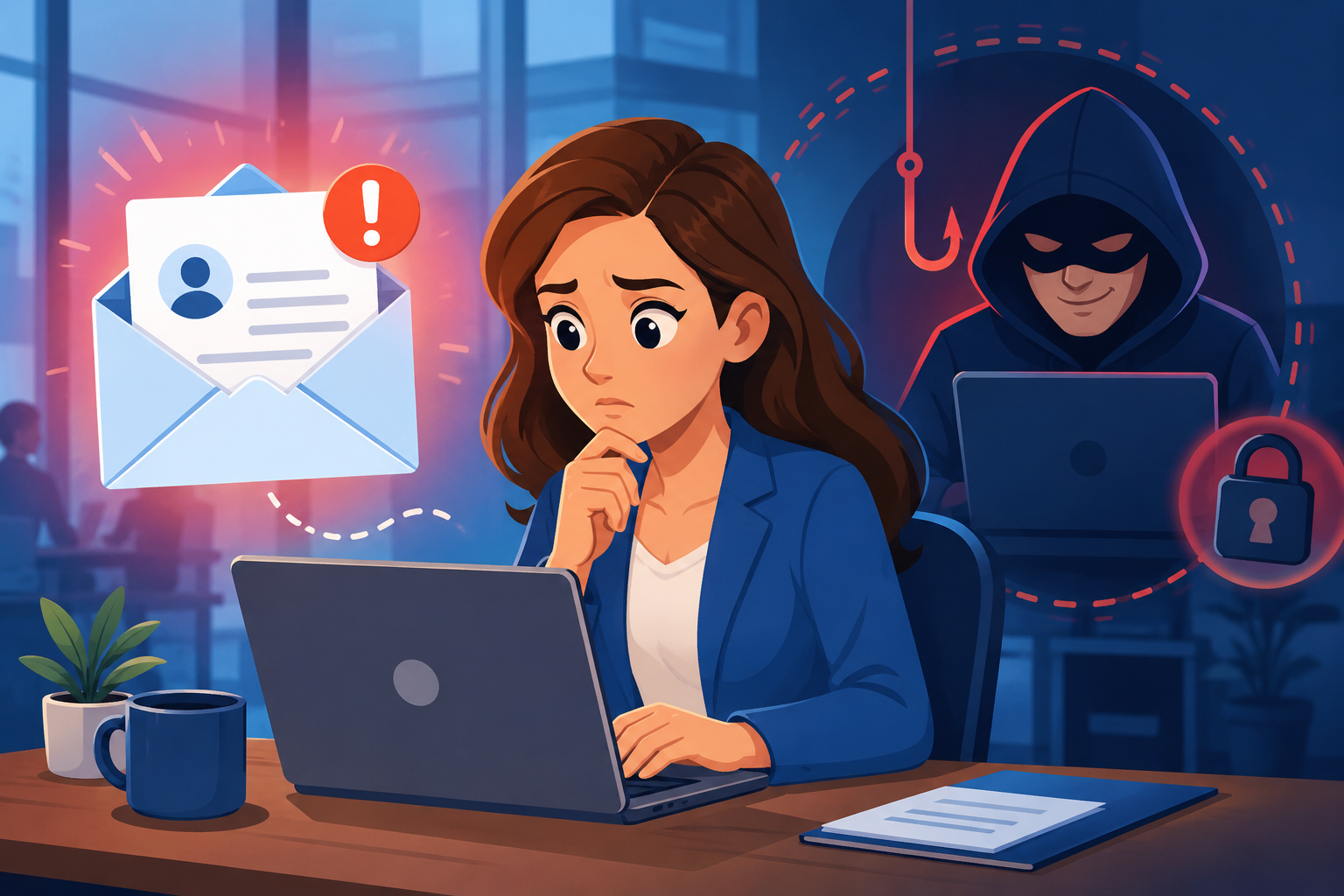
The email shows up on a Tuesday morning.
It looks like it’s from the CEO. The name matches. The tone feels right. Even the signature looks familiar.
“Hey — can you help me with something quickly? I’m in back-to-back meetings. Need you to handle a vendor payment. I’ll explain later.”
The new employee pauses.
They’ve been with the company for four days. They’re still figuring out how things work. They don’t know what’s normal yet, and they definitely don’t want to be the person questioning leadership during their first week.
So they help.
And just like that, the damage is done.
Why the First Week Is So Dangerous
Every spring and summer, businesses bring in a new wave of employees — recent graduates, interns, seasonal staff, and new hires trying to make a good impression.
For most companies, it’s onboarding season.
For cybercriminals, it’s opportunity season.
According to Keepnet Lab’s 2025 New Hires Phishing Susceptibility Report, new employees are dramatically more likely to fall for phishing attacks than experienced staff. CEO impersonation scams, in particular, succeed far more often with first-week employees because attackers understand something most businesses overlook:
New hires are operating in uncertainty.
They don’t yet know how leadership communicates.
They don’t know what “normal” looks like.
And they don’t want to appear difficult, skeptical, or inexperienced.
That combination creates the perfect environment for social engineering attacks.
And honestly? The most vulnerable employee usually isn’t the careless one.
It’s the helpful one.
If you own or manage an insurance agency, you probably already know exactly who on your team would respond first.
The Real Problem Isn’t Training — It’s Chaos
Most business owners assume cybersecurity failures happen because employees ignore the rules.
But during onboarding, many employees haven’t even learned the rules yet.
Think about a typical first day:
- The laptop isn’t fully configured.
- Email access is still being set up.
- Someone shares a temporary login “just for now.”
- A file gets saved locally because the shared drive isn’t working yet.
- A personal phone gets used to look up client information because it’s faster.
None of those moments feel dangerous.
They feel practical. Helpful. Efficient.
But those small shortcuts quietly create risk:
- Shared credentials create access nobody tracks.
- Files end up outside your backup systems.
- Personal devices touch sensitive business data.
- Employees don’t know what suspicious activity actually looks like.
The phishing email didn’t create the vulnerability.
The chaotic onboarding process did.
And for insurance agencies, that risk carries even more weight.
You’re handling sensitive client information every day — Social Security numbers, financial records, policy details, health information, payment data. Minnesota’s Information Security Program law already requires insurance agencies to maintain safeguards around that information.
A breach doesn’t just create operational headaches.
It threatens client trust, compliance obligations, and the reputation you spent years building.
Why Insurance Agencies Are Especially Vulnerable
Insurance agencies run on trust.
Clients hand over deeply personal information because they believe you’ll protect it.
That’s why cybercriminals increasingly target agencies and brokerages. They know smaller and midsize firms often have limited internal IT resources, busy staff wearing multiple hats, and onboarding processes that prioritize speed over structure.
And frankly, most phishing attacks today don’t rely on sophisticated hacking.
They rely on human pressure.
Urgency. Familiarity. Authority.
A new employee trying to prove themselves is exactly the kind of target attackers love.
What a Secure First Week Actually Looks Like
The good news is this problem is fixable — and it doesn’t require overwhelming your new hires with technical jargon or hour-long security presentations.
It comes down to preparation.
1. Access Should Be Ready — Not Improvised
Before a new employee walks through the door:
- Their laptop should be configured.
- Credentials should already exist.
- Permissions should be clearly defined.
- Multi-factor authentication should be enabled.
No borrowed logins.
No temporary passwords.
No “we’ll clean this up later.”
Because later usually never comes.
2. Explain What “Normal” Looks Like
This doesn’t need to be complicated.
A simple 10-minute conversation can prevent major mistakes:
- Does leadership ever request payments by email?
- How should suspicious messages be verified?
- Who should employees contact if something feels off?
Most employees want to do the right thing.
They just need permission to slow down and ask questions.
3. Give Them a Safe Place to Ask
This might be the most important piece of all.
Many first-week mistakes happen quietly because employees are afraid of looking inexperienced.
The employee who clicked that phishing email probably had doubts.
But they didn’t know who to ask — or they worried asking would make them look incapable.
Create a culture where verification is encouraged, not criticized.
The safest organizations aren’t the ones with perfect employees.
They’re the ones where employees feel comfortable speaking up.
Strong Security Starts Before the First Login
Most cybersecurity conversations focus on tools:
Firewalls. Antivirus software. Threat monitoring.
Those things matter.
But the truth is, some of the biggest risks appear long before a malicious email ever lands in someone’s inbox.
They show up in rushed onboarding.
In unclear processes.
In employees trying to “figure it out as they go.”
And in insurance agencies, where trust is everything, those small cracks matter more than most business owners realize.
Because clients won’t remember how quickly you onboarded a new employee.
But they will remember how you handled their information.
Final Thought
Maybe your onboarding process already feels solid.
Maybe your agency is small enough that everyone gets personal attention during their first week.
But if you’ve ever had a new hire quietly improvise their way through onboarding, it’s worth asking one important question:
Would they know what to do if that Tuesday morning email showed up tomorrow?
Because the best time to close that security gap is before someone clicks.

.png)