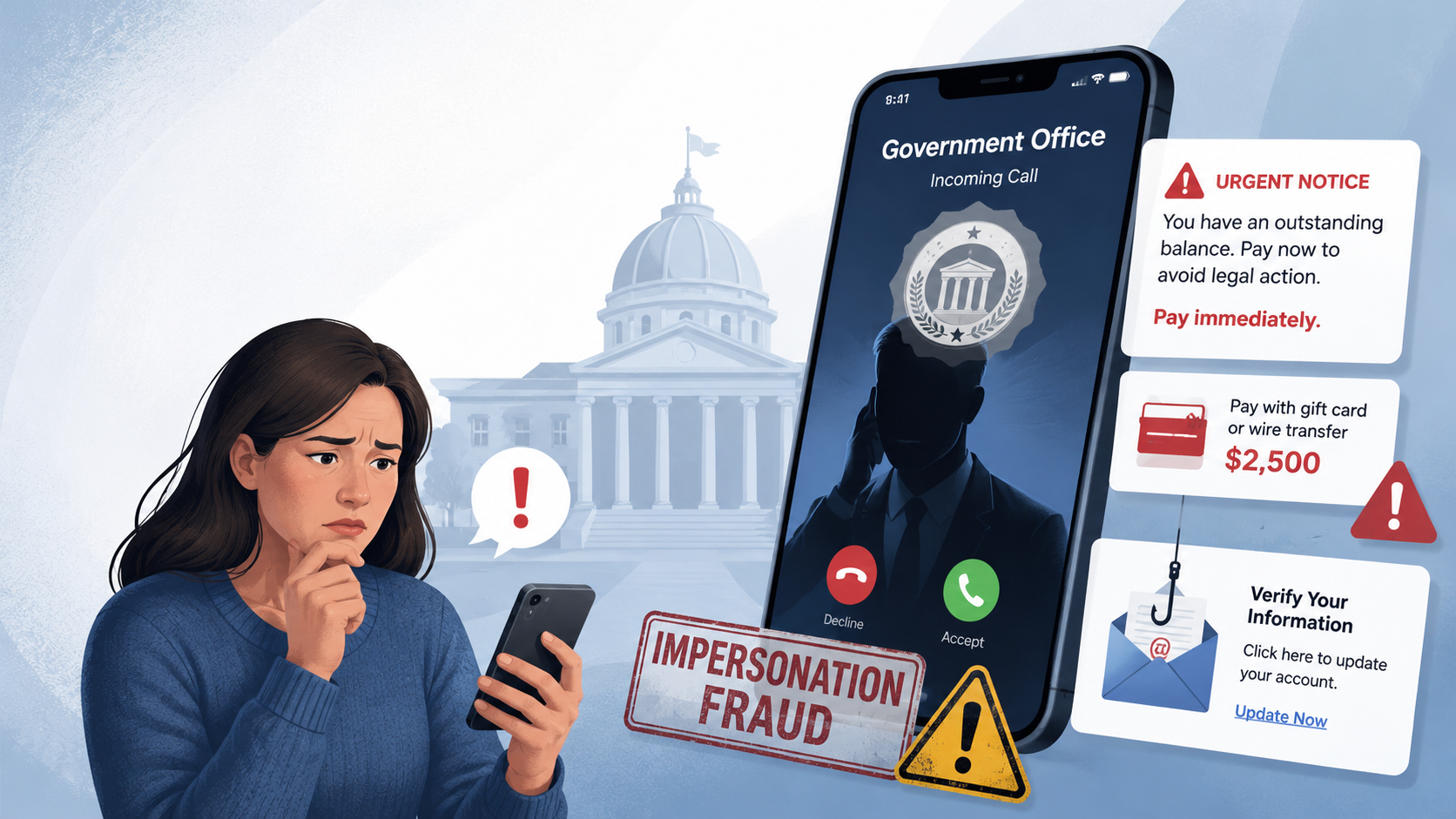
Government imposter scams happen when someone pretends to be from the government in order to steal your money or personal information.
These scammers may say they are from the IRS, CRA, Social Security, Medicare, Medicaid, law enforcement, or another government office. They may sound serious, urgent, or even frightening.
Their goal is to make you panic so you act quickly without checking first.
Important Reminder: Government Notices Usually Come by Mail
The government will not unexpectedly contact you by email, text message, or social media to demand payment, threaten arrest, or ask for private information.
If a message says it is from the government and asks you to click a link, send money, buy gift cards, transfer funds, or share personal details, treat it as suspicious.
Official government notices are usually sent through the mail.
When in doubt, do not reply. Contact the agency yourself using a phone number or website you know is official.
Common Government Imposter Scams
IRS or CRA Scams
A scammer may claim you owe back taxes or have committed a financial crime. They may demand payment right away.
They may ask for payment by gift cards, wire transfer, cryptocurrency, or another unusual method. Real government agencies do not ask for payment this way.
Social Security or Social Insurance Scams
A scammer may say there is illegal activity connected to your Social Security Number or Social Insurance Number.
They may ask for money or personal information to “fix” the problem. This is a warning sign.
Medicare, Medicaid, or Healthcare Scams
Scammers may offer fake benefits, threaten to cancel your coverage, or say you must renew your card right away.
They may also pressure you to switch plans or give them your healthcare number.
Law Enforcement Scams
A scammer may pretend to be police or another law enforcement officer. They may say you missed jury duty, have a fine, or are connected to an illegal package.
Some scammers also pretend to be foreign law enforcement and may target specific communities.
How Scammers May Contact You
Scammers may contact you in several ways:
Phone calls: They may use robocalls, fake caller ID numbers, or aggressive threats.
Emails: They may use official-looking logos, spelling mistakes, strange attachments, or links that do not look right.
Text messages: They may send unexpected links, use poor grammar, or contact you from an unknown number.
Remember: A digital message that claims to be from the government should always be treated carefully.
Warning Signs of a Scam
Be careful if someone:
- Contacts you unexpectedly and says they are from the government
- Asks for your Social Security Number, Social Insurance Number, bank details, or passwords
- Threatens arrest, deportation, fines, or loss of benefits
- Demands payment by gift card, wire transfer, or cryptocurrency
- Sends a suspicious link or attachment
- Tells you not to talk to anyone else
- Says you must act immediately
Scammers use fear and pressure. A real agency will give you time to verify the information.
What to Do If You Receive a Suspicious Message
If You Get a Text Message
Do not click any links. Delete the message, mark it as spam, and block the sender.
If You Get a Phone Call
Do not argue or explain yourself. Hang up right away. Block the number if possible.
If You Get an Email
Do not open attachments or click links. Mark the email as spam and block the sender.
If You Are Unsure
Look up the agency’s official website or phone number yourself. Do not use the contact information inside the suspicious message.
How to Protect Yourself
You can lower your risk by taking a few simple steps:
- Do not share personal information online unless you are sure the website is real
- Use strong passwords
- Use a password manager if you are comfortable with one
- Keep your phone, computer, and security software updated
- Review privacy settings on social media
- Shred papers that contain private information
- Register for Do Not Call lists when available
How to Report a Scam
In the United States, report fraud to the Federal Trade Commission at reportfraud.ftc.gov or call 1-877-FTC-HELP.
In Canada, report scams to the Canadian Anti-Fraud Centre at antifraudcentre-centreantifraude.ca or call 1-888-495-8501.
You may also contact your local law enforcement office.
If You Have Already Been Scammed
Stop sending money immediately.
Then take these steps:
- Contact your bank or credit card company
- Change passwords for affected accounts
- Freeze or protect your credit if needed
- Save messages, emails, phone numbers, receipts, and other details
- Report the scam to the proper agency
Acting quickly can help limit the damage.
Need More Help?
For more information and support, contact us at 763-335-9255 or visit www.bouncbacksolutions.com
Credit: This lesson guide is based on materials from Cyber-Seniors

.png)