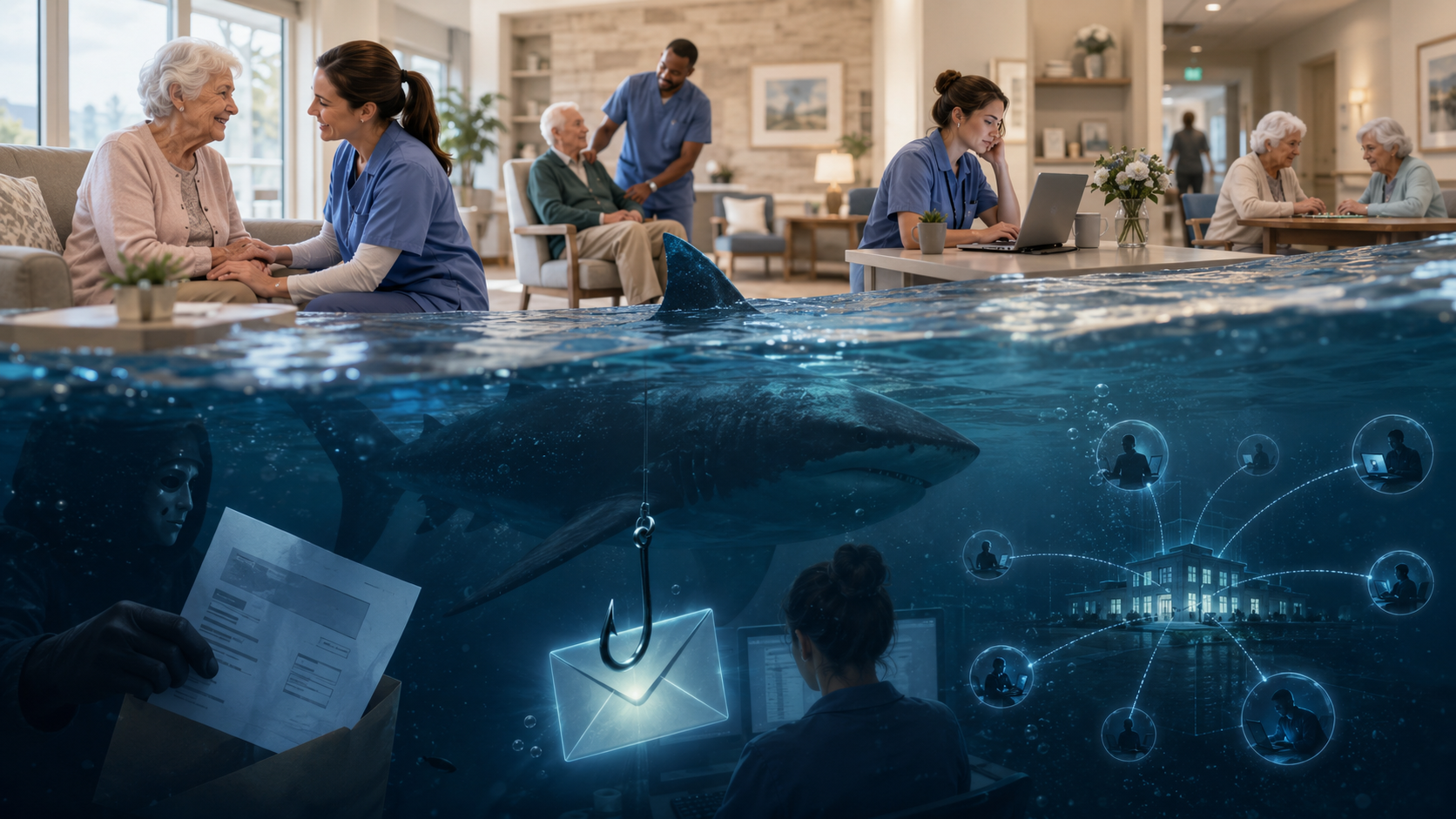
On the surface, everything may look calm.
Residents are receiving care. Staff members are following their routines. Vendors are completing their work. Your systems appear to be running normally.
But some of the greatest cybersecurity risks are the ones you cannot see.
Much like a shark moving beneath calm water, cybercriminals try to blend into everyday activity. They wait for a busy employee, a confusing payment request, or an overlooked vendor account.
Summer can make these risks even harder to spot. Employees take vacations. Schedules change. Temporary staff fill in. Leaders may have less time to review unusual requests.
Here are three threats that may already be circling your senior care community.
1. Fake Invoices and Vendor Impersonation
Cybercriminals do not always need to break into a computer system.
Sometimes, they only need to send one believable email.
The message may appear to come from a food supplier, medical vendor, maintenance company, executive, or another trusted partner. It may request a payment, provide “updated” banking details, or ask an employee to act quickly.
The email looks normal. The request sounds urgent. A staff member pays the invoice.
Then the money disappears.
These scams are especially dangerous when the employee who normally approves payments is away. A temporary backup may not know which requests are unusual. They may also feel uncomfortable slowing down or questioning someone who appears to be a senior leader.
A simple verification process can prevent many of these incidents.
Before changing payment information or sending money, staff should call the vendor using a phone number already on file. They should never use the number included in the suspicious email.
A two-minute phone call can prevent a costly mistake.
2. Phishing Attacks That Target Busy Employees
Phishing works because people are busy.
A staff member receives a password-reset email between resident needs. Someone gets a text that appears to come from the IT company. A manager sees an urgent request just before a meeting and clicks without thinking.
Cybercriminals create this pressure on purpose.
They want employees to feel rushed, worried, or afraid of delaying an important request.
Software protections matter, but culture matters too.
Employees should feel comfortable stopping when something seems unusual, including:
- An unexpected login request
- A payment instruction that arrives without warning
- A message claiming an account will be closed immediately
- A link or attachment the employee was not expecting
- A text message that appears to come from a supervisor or IT provider
No employee should be criticized for taking time to verify a request.
Speed is one of the strongest weapons cybercriminals use. Slowing down takes that weapon away.
For senior care leaders, this is not only an IT issue. One careless click could interrupt access to resident records, scheduling tools, medication information, or other systems that support daily care.
Protecting technology helps protect residents.
3. Third-Party Risks That Travel Quickly
Senior care communities depend on outside partners.
You may work with an electronic health record provider, pharmacy, billing company, payroll service, building-access vendor, camera provider, nurse-call system, consultant, or outsourced IT company.
Many of these vendors can access your systems or sensitive information.
When one of them is compromised, the problem may not stay with the vendor. The attacker may use that trusted connection to reach your organization.
This is known as third-party or supply-chain risk.
It can include:
- Software connected to your network
- Vendors holding usernames and passwords
- Contractors with remote access
- Former vendors whose accounts were never removed
- Staff members using shared accounts
- Service providers that store resident or employee information
Outsourcing a service does not outsource your responsibility to protect resident data.
Every senior care organization should be able to answer three questions:
- Which vendors can access our data or systems?
- What information or technology can they reach?
- Who inside our organization is responsible for reviewing that access?
When those answers are unclear, hidden risk begins to grow.
By the Time You See It, It May Already Be Moving
Cybercriminals rarely announce themselves.
The organizations that suffer an attack are not always ignoring an obvious warning. Many believe they are safe because nothing appears to be wrong.
That is what makes hidden risk so dangerous.
For a senior care community, the damage can reach far beyond computers. An attack can disrupt resident care, expose private health information, create legal and regulatory concerns, and weaken the trust families have placed in your organization.
You’re not alone in this.
Cybersecurity does not have to become one more overwhelming responsibility on your desk. The first step is simply gaining a clear picture of where your risks are hiding.
A thoughtful review should examine vendor access, employee habits, email protections, backups, remote connections, and your plan for responding when something goes wrong.
The goal is not to create fear.
The goal is to give you peace of mind—so you can protect your residents, support your staff, and lead with confidence.
.png)