AI vs. Cyber Attacks: Why Machine Learning is Your BestDefense
The Arms Race in Cybersecurity
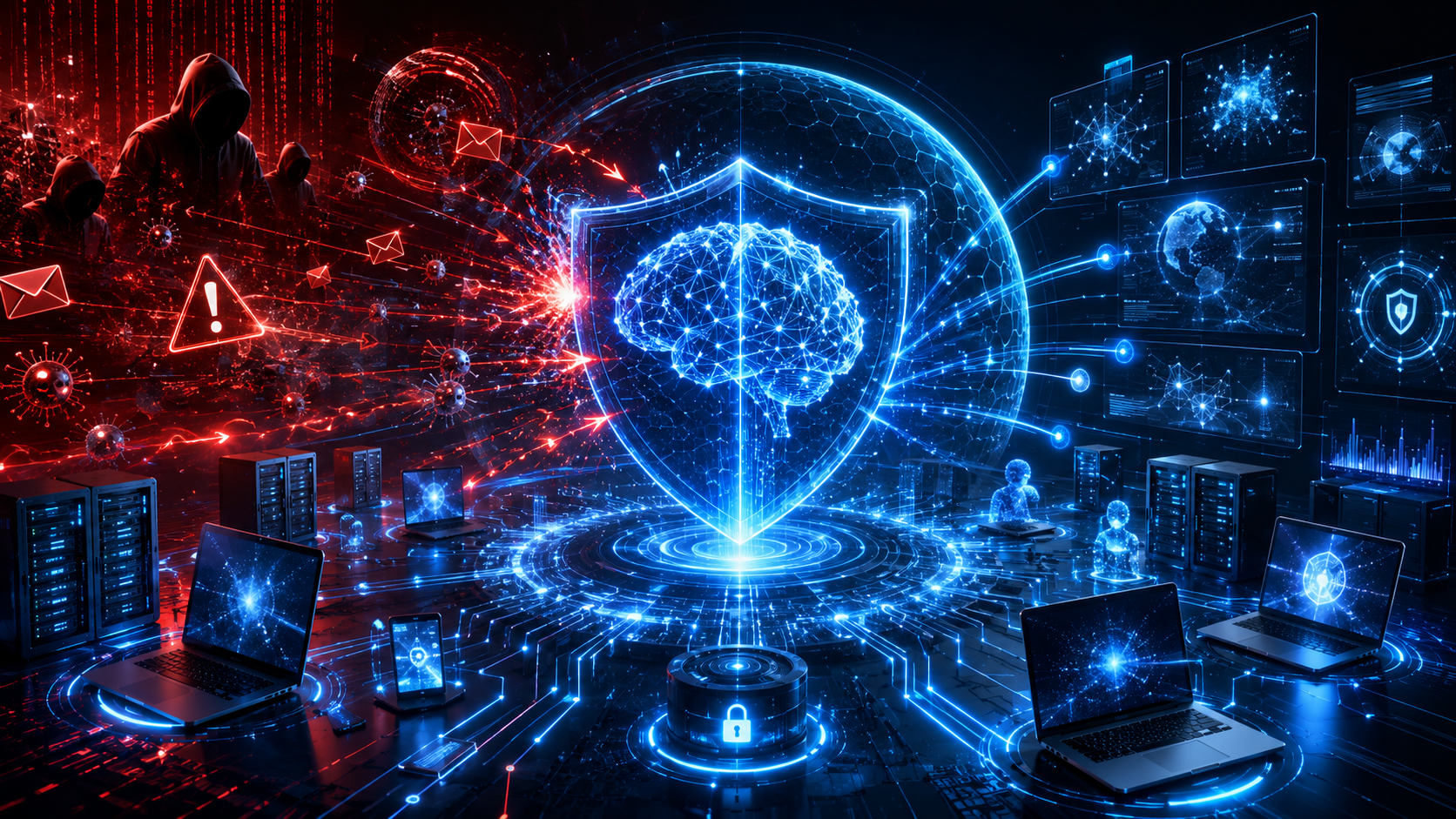
Every day, cybercriminals become more sophisticated. Theyuse automation, AI, and machine learning to:
- Generate thousands of unique malware variants that evade signature detection
- Launch highly targeted phishing attacks using personalization AI
- Probe networks continuously, looking for weaknesses
- Evade traditional security controls with fileless attacks and living-off-the-land techniques
The question is no longer if your business will be targeted,but when, and whether your defenses can handle what's coming.
The answer? You need AI-powered defense that fights firewith fire.
Why Traditional Security Can't Keep Up
Legacy security approaches were designed for a simpler time:
- Firewalls create a perimeter, but today's workforce is distributed across homes, coffee shops, and branch offices
- Antivirus software relies on signatures, but 70% of malware is now zero-day, meaning it's never been seen before
- Manual monitoring can't scale, with billions of security events occurring daily across enterprise networks
These tools have value, but they're reactive. They wait fora known threat to trigger an alert. By then, it's often too late.
How Machine Learning Provides Proactive Defense
Machine learning flips the paradigm from reactive toproactive. Here's how:
- Predictive Threat Identification
ML models analyze billions of data points to identifypatterns that precede attacks. By recognizing early indicators of compromise(IoCs), AI can alert you to threats before they launch.
- Adaptive Protection
Traditional security is static, applying the same rulesregardless of context. ML-powered security adapts in real-time based on:
- Current threat landscape
- User behavior patterns
- Network conditions
- Time of day and other contextual factors
- Autonomous Response
Advanced AI security platforms can take immediate action:
- Isolate compromised endpoints
- Block malicious IP addresses
- Quarantine suspicious emails
- Terminate unauthorized access attempts
This autonomous response happens in milliseconds, far fasterthan any human could react.
Real-World AI vs. Human Hackers
Threat Type
Traditional Defense
AI-Powered Defense
Zero-day malware
Struggles to detect
Identifies based on behavioral patterns
Phishing emails
Keyword filters miss variants
Analyzes sender behavior, content, context
Insider threats
Difficult to detect
Monitors user behavior for anomalies
Ransomware
Often detected too late
Identifies encryption behavior instantly
Credential stuffing
Password checks only
Analyzes login patterns and
What AI Security Looks Like in Practice
Scenario 1: Targeted Phishing Attack
A sophisticated attacker sends an email that appears to befrom your CFO, requesting an urgent wire transfer. Traditional email securitymight miss it because it doesn't contain obvious malicious links orattachments.
AI-powered security analyzes:
- Email header anomalies
- Writing style deviations
- Sender reputation history
- Context (is this request unusual for this sender?)
- Embedded links (even if they look legitimate)
Result: The email is flagged or quarantined before anyoneclicks.
Scenario 2: Ransomware Deployment
An employee accidentally downloads a malicious file.Traditional antivirus might not recognize it because it's a new variant.
AI Endpoint Detection and Response:
- Monitors file behavior in real-time
- Detects when the file begins encrypting files
- Immediately isolates the endpoint
- Alerts the security team
- Begins remediation
Result: The ransomware is stopped within seconds, before itcan spread.
Building Your AI Defense Strategy
Ready to leverage AI for better security? Here's your actionplan:
Assessment: Start with a security assessment to understandyour current posture and identify gaps where AI can add the most value.
Layered Approach: AI works best as part of a layeredsecurity strategy. Ensure you have:
- AI-powered email security
- Endpoint detection and response (EDR)
- Network traffic analysis
- Identity and access management
Integration: Choose platforms that integrate with yourexisting tools. AI should enhance, not replace, your current investments.
Expertise: AI reduces, but doesn't eliminate, the need forskilled security professionals. Ensure you have the expertise to interpret AIalerts and respond appropriately.
Continuous Improvement: AI learns from incidents. Regularlyreview what's working, what's being flagged, and how your systems are evolving.
The Bottom Line
Cyber criminals are using AI. The question is: are you?
Machine learning provides the proactive, adaptive,intelligent defense that modern businesses need. It's not about replacing humanexpertise, it's about empowering your team with tools that can keep pace withevolving threats.
The future of cybersecurity is AI-driven. The businessesthat embrace it today will be better protected tomorrow.

.png)