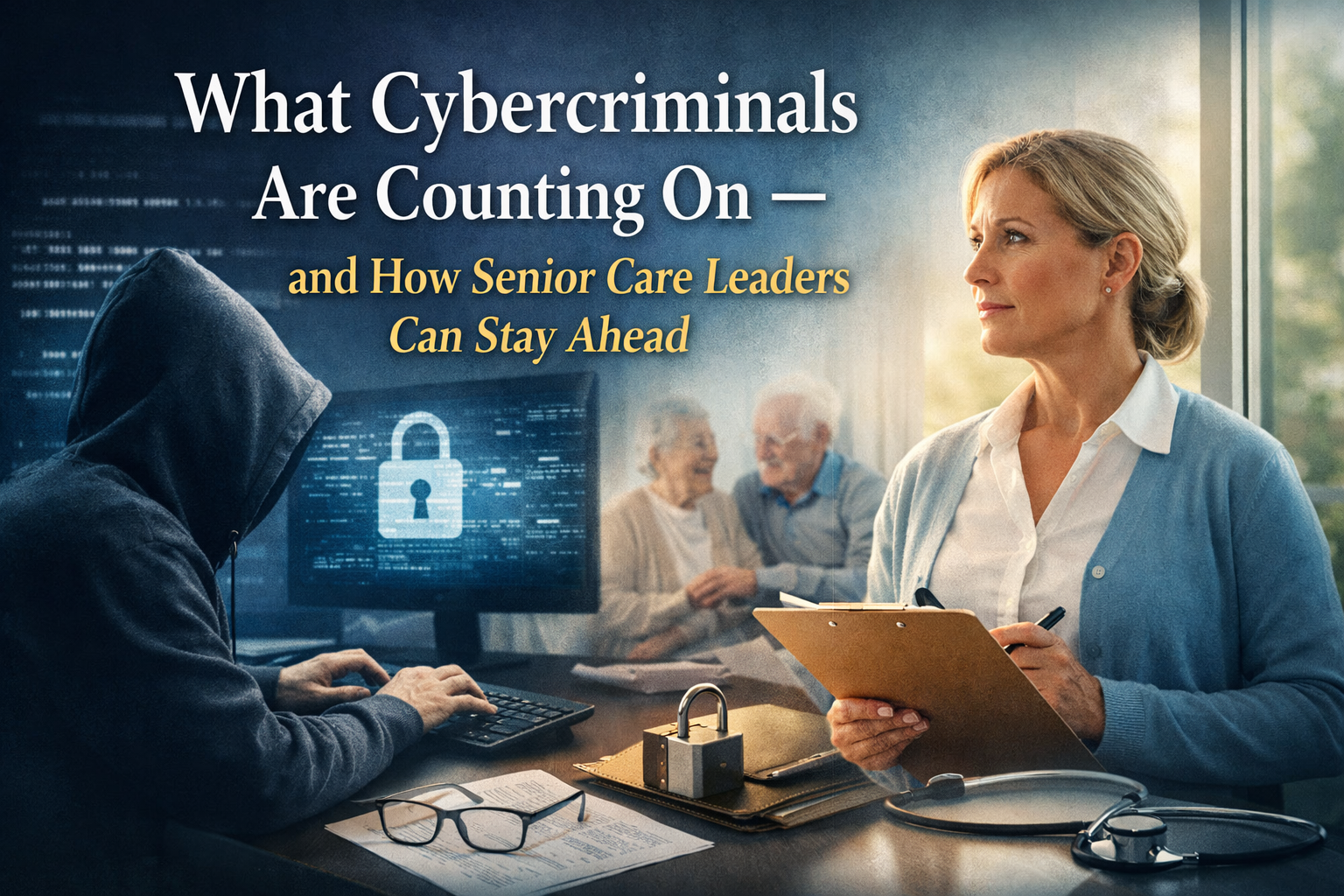
Cybercriminals are planners.
While most of us start the year focused on staffing, budgets, and resident care, attackers are quietly reviewing what worked last year — and deciding who will be easiest to target next.
Senior care facilities often rise to the top of that list.
Not because leaders are careless.
Not because staff don’t care.
But because senior care is busy, mission-driven work — and cybercriminals rely on distraction, trust, and time pressure to succeed.
Understanding what they’re counting on is the first step to staying ahead.
What They’re Counting On #1: Staff Being Busy and Helpful
Today’s cyber scams rarely look suspicious.
Emails and texts are written using AI. They sound polite, professional, and familiar. They reference real vendors, real systems, and real situations your team deals with every day.
January is especially risky:
- New hires are still learning procedures
- Year-end billing and payroll are in motion
- Leaders and staff are stretched thin
A message might look like this:
“Hi Susan,
We tried sending the updated invoice, but it didn’t go through. Can you confirm this is still the right email for accounting? I’ve attached the updated version.
Thanks,
[Vendor Name]”
No urgency. No obvious warning signs.
What’s at risk:
One click can expose resident information, payroll data, or access to care systems — putting HIPAA compliance and resident trust in jeopardy.
How leaders stay ahead:
- Teach staff to verify before responding, especially when money or documents are involved
- Use email security tools that flag impersonation attempts
- Reinforce that pausing to confirm is a sign of professionalism, not distrust
A culture of verification protects everyone.
What They’re Counting On #2: Trust in Familiar Names
Attackers frequently impersonate people your staff already trusts:
- Vendors requesting “updated” banking details
- Leadership asking for urgent payments
- HR requesting tax or payroll information
Sometimes it’s not even an email. Voice cloning scams now imitate leadership voices using publicly available recordings.
Why this hits senior care hard:
Lean teams, especially in finance or administration, are asked to move quickly — and attackers know that.
How leaders stay ahead:
- Require call-back verification for any payment or banking changes
- Never approve financial changes through email alone
- Use multi-factor authentication (MFA) on all administrative and financial accounts
These simple controls stop some of the most costly scams.
What They’re Counting On #3: “We’re Too Small to Be a Target”
This belief is one of the biggest risks in senior care.
Large hospitals have security teams and complex defenses. Senior care facilities often don’t — and attackers know it.
They also know:
- Resident care depends on systems staying online
- Facilities may lack in-house IT security expertise
- Leaders are juggling compliance, staffing, families, and operations
Healthcare data is valuable, and urgency increases the chance of payment during an attack.
How leaders stay ahead:
- Implement strong basics: MFA, updates, backups, and monitoring
- Shift the mindset from “size” to risk and responsibility
- Work with partners who understand senior care, HIPAA, and Minnesota regulations
Being prepared doesn’t require enterprise complexity — just consistency.
What They’re Counting On #4: New Hires and Tax Season Confusion
New employees want to help and make a good impression. Attackers take advantage of that.
Add tax season to the mix, and requests for W-2s or payroll information increase — often disguised as messages from leadership or HR.
The real danger:
Once employee data is stolen, identity theft follows. Staff trust is damaged, and leadership is left managing the fallout.
How leaders stay ahead:
- Include security awareness in onboarding
- Clearly document policies like “We never send W-2s by email”
- Publicly support and thank employees who verify requests
Protecting people sometimes means slowing things down.
Staying Ahead Is Kinder Than Recovering Later
Cybersecurity isn’t about fear. It’s about foresight.
Reacting after an incident means disruption, investigations, notifications, and loss of trust.
Preventing one often means nothing happens at all — which is exactly the point.
Just like emergency preparedness or infection control, cybersecurity is now part of responsible senior care leadership.
How Senior Care Leaders Quietly Stay Ahead
Facilities that stay off the “easy target” list typically have:
- 24/7 monitoring to catch issues early
- Strong access controls so one mistake doesn’t spread
- Regular staff training on realistic, modern scams
- Clear verification policies for payments and data requests
- Tested backups that protect against ransomware
- Ongoing patching and risk reduction
This isn’t about technology for technology’s sake.
It’s about protecting residents, supporting staff, and preserving the trust families place in your community.
A Resolution Worth Keeping
Cybercriminals are counting on senior care leaders being overwhelmed and under-supported.
The best way to stay ahead isn’t learning every technical detail —
it’s partnering with experts who understand senior care and take this burden off your plate.
Peace of mind isn’t optional in senior living.
It’s part of your promise to residents and families.
And staying ahead starts with knowing what others are counting on — and refusing to give it to them.

.png)