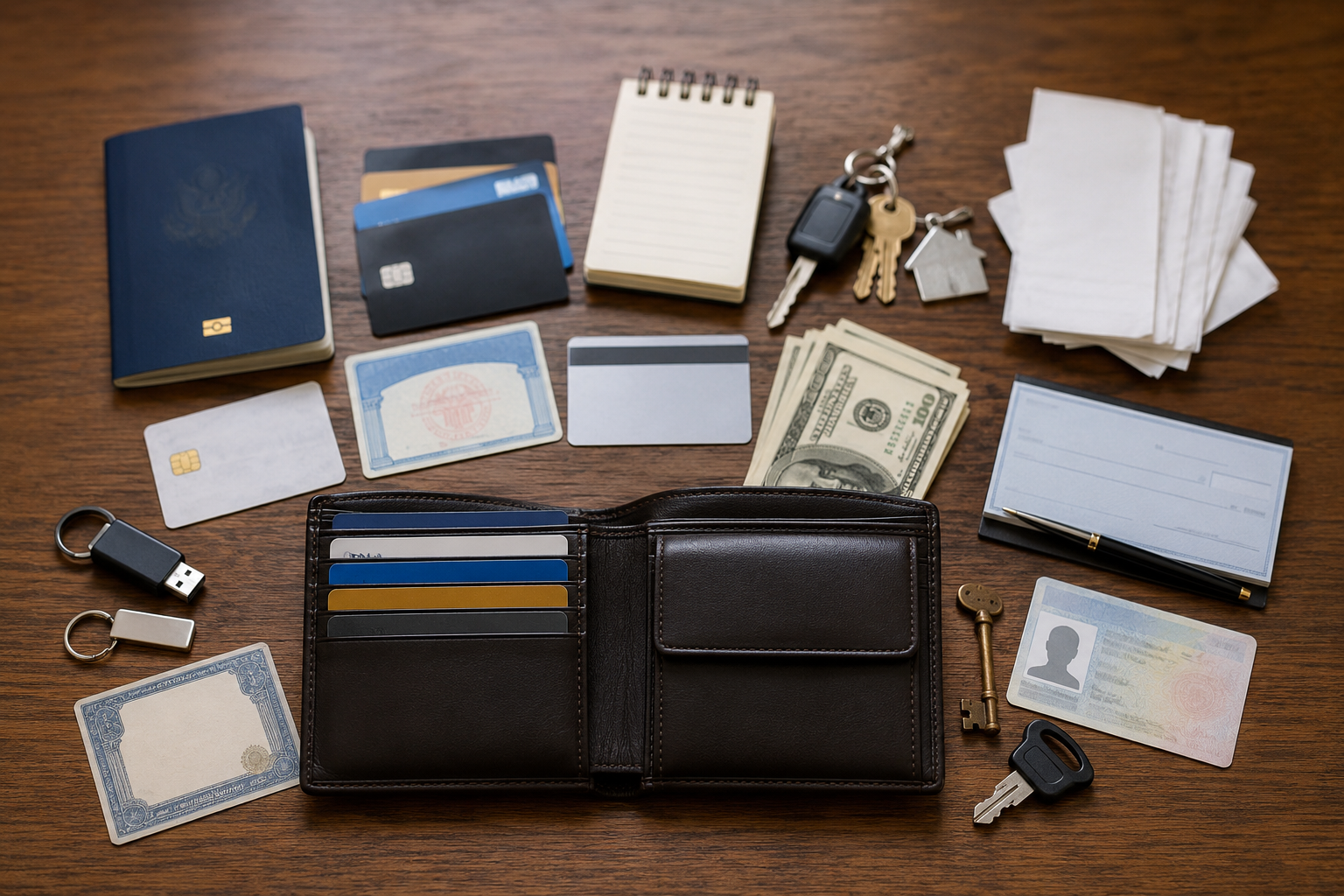
A wallet can easily turn into a small filing cabinet. We tuck in cards, receipts, notes, checks, medical cards, and other papers “just in case.” But carrying too much personal information can be risky.
If your wallet or purse is lost or stolen, a thief may get more than cash or credit cards. They may get information they can use to open accounts, make purchases, file false claims, or pretend to be you.
The goal is simple: carry only what you need for everyday life or for a specific errand. Keep the rest safely at home.
Why a Crowded Wallet Can Be Dangerous
Identity theft happens when someone uses your personal information without permission. This can include your name, Social Security number, birth date, address, medical information, or account numbers.
A thief does not always need every detail about you. Sometimes one piece of information can help them find or guess the rest.
That is why it is smart to clean out your wallet from time to time.
Three Simple Steps to Make Your Wallet Safer
1. Empty and Sort Your Wallet
Take everything out of your wallet or purse. Put the items into piles.
Ask yourself:
“Do I use this often?”
“Would I need this in an emergency?”
“Could this cause trouble if a thief found it?”
Throw away old receipts, expired coupons, shopping lists, and cards you rarely use. Keep only the items you truly need.
2. Store Important Items Safely at Home
Some items are important, but they do not need to travel with you every day.
Set up one safe place at home for these items. This could be a locked drawer, a small safe, or another secure spot.
You can keep extra cards, important papers, and backup cash there. Take an item with you only when you need it, then return it afterward.
3. Make a Record of Your Cards
Make a copy or take a clear photo of the front and back of the cards you carry. This can help you know whom to contact if your wallet is lost or stolen.
Keep these copies in a safe place. Do not leave them lying around where others can see them.
15 Things You Should Not Keep in Your Wallet
1. Social Security Card
Do not carry your Social Security card unless you truly need it that day.
Your Social Security number is one of the most valuable pieces of personal information a thief can get. It may be used to open credit accounts, apply for loans, or commit other types of fraud.
2. Too Many Credit Cards
Carry one main credit card and one debit card, if possible. Leave the rest at home.
The more cards you carry, the more damage a thief can do. A stolen card can be used for online purchases or in stores before you even realize it is gone.
Also, avoid keeping credit card receipts in your wallet. They may contain information that helps a scammer trick you.
3. Checkbook or Blank Checks
Blank checks are risky because they contain your bank information.
Many purchases no longer require a check. Unless you are going somewhere that you know requires one, leave your checkbook at home.
4. Work ID Card
Your work ID may show your name, employer, and other details.
A criminal could use this information to create a targeted scam. For example, they might pretend to be someone from your workplace or send a fake email that looks official.
5. Passport or Passport Card
A passport is a very important identity document. Do not carry it unless you need it for travel or a specific appointment.
A stolen passport can be used in serious types of identity fraud.
6. A List of Passwords
Never keep a written list of passwords in your wallet.
Passwords are like keys to your online accounts. If someone finds them, they may be able to get into your email, bank account, shopping accounts, or social media.
A safer choice is to use a trusted password manager. A password manager is a secure app that stores your passwords for you.
7. Gift Cards
A gift card is almost like cash. If someone steals it, they may be able to use the remaining balance.
Carry gift cards only when you plan to use them.
8. Birth Certificate
A birth certificate contains important personal details. It can be used to get other documents or open accounts.
Keep it in a secure place at home, not in your wallet or purse.
9. Library Card
A library card may seem harmless, but it can still be misused.
Someone could borrow items in your name and never return them. You may be responsible for fees or replacement costs.
10. House Key
A house key should not be kept with your wallet if your wallet contains your address.
If a thief finds both your key and your address, your home could be at risk.
11. Legal Papers
Do not carry legal documents unless you need them that day.
Divorce papers, court documents, financial papers, or family records may contain sensitive information. This can include account numbers, children’s birth dates, addresses, and other private details.
12. Checks Made Out to You
If someone gives you a check, deposit it as soon as you can.
If a thief steals a check made out to you, they may try to forge your signature and cash it. Many banks now allow you to deposit checks using a smartphone app. This is called mobile deposit.
13. Your PIN
A PIN is a short number used to access a debit card, credit card, or account.
Do not write your PIN on the card or on a note in your wallet. If a thief steals both the card and the PIN, they may be able to take money from your account.
14. Cryptocurrency Recovery Phrase
Some people own cryptocurrency, which is a type of digital money. A recovery phrase, sometimes called a seed phrase, is a list of words that can restore access to that digital money.
Never keep this phrase in your wallet. Anyone who has it may be able to take your cryptocurrency.
15. Receipts
Do not let receipts pile up in your wallet.
Most receipts do not show your full credit card number, but they may show enough information to help a scammer. A thief could use details from a receipt to send a fake email or text that looks like it came from your credit card company or a store you use.
Be Careful with Your Medicare Card
Your Medicare card no longer shows your Social Security number. That is good news. But your Medicare number is still private and should be protected.
Carry your Medicare card only when you need it, such as when you are going to a doctor, hospital, pharmacy, or medical appointment.
Do not share your Medicare number with someone who contacts you unexpectedly by phone, email, text, or at your door.
Be especially careful if someone says:
“Your benefits will be canceled.”
“You need to pay right away.”
“We need your Medicare number to send you a free item.”
These may be scams.
If someone asks for your Medicare information and you think it may be a scam, report it to Medicare at 800-633-4227, also known as 800-MEDICARE. Current reporting options can change, so it is wise to check Medicare’s official website for the latest instructions.
What About Medicare Advantage or Other Health Plan Cards?
If you have a Medicare Advantage plan or another Medicare health plan, you usually use that plan’s card when you get care.
You may not need to carry your original Medicare card every day. Keep it safe at home unless you need it for a specific reason, such as changing plans or returning to Original Medicare.
Why Thieves Want Small Pieces of Information
Criminals do not always use stolen information right away. Sometimes they collect small pieces of information from many people and combine them.
This is called synthetic identity fraud.
That means a criminal may mix real information, such as a Social Security number, with fake information, such as a made-up name or address. They create a false identity and use it to open accounts or commit fraud.
This type of fraud can be hard to notice because the identity is partly real and partly fake.
That is one more reason to keep personal information out of your wallet whenever possible.
A Simple Wallet Safety Checklist
Before you leave home, ask yourself:
Do I need this card today?
Could this item help someone steal my identity?
Is this something I can keep safely at home instead?
A safer everyday wallet might include:
Your driver’s license or state ID
One main credit card
One debit card
A small amount of cash
Your health plan card only when needed
Any card needed for that day’s errand
Final Reminder
A lighter wallet is not just easier to carry. It is safer.
Take a few minutes every month to clean out your wallet or purse. Remove old receipts, extra cards, checks, passwords, and personal documents. Store important items in a secure place at home.
A little organizing today can save you a great deal of trouble later.
Note, This post was based on a blog by Christina Ianzito
For more information see: https://www.aarp.org/money/scams-fraud/worst-things-to-keep-in-wallet/
.png)