Artificial intelligence is no longer just for large corporations with big technology budgets. It is already changing how small businesses market their services, serve customers, manage operations, control costs, and compete.
At the same time, the infrastructure behind AI is becoming more expensive and harder to access. Demand for advanced chips, memory, data centers, cloud computing, and AI tools is rising quickly. Some experts warn that shortages in high-bandwidth memory, a key component used in advanced AI systems, could continue into 2027 and affect costs across industries.
For small business owners, the message is simple: adopting AI now is not just about innovation. It may be one of the smartest ways to protect margins, improve efficiency, and stay competitive.
AI Can Help Small Businesses Do More With Less
Small businesses often operate with limited staff, tight budgets, and little room for waste. That makes AI especially valuable.
AI tools can help small businesses:
- Respond to customer questions faster
- Draft emails, proposals, blogs, and social media posts
- Automate repetitive administrative tasks
- Analyze sales trends and customer behavior
- Improve scheduling, invoicing, and follow-up
- Support bookkeeping, HR, and compliance workflows
- Forecast inventory, demand, or staffing needs
- Help employees work more efficiently
Small businesses do not need to build custom AI systems or hire a large technical team to benefit. Many useful AI tools are already available through affordable software platforms, cloud tools, marketing systems, CRMs, accounting platforms, and customer service apps.
Waiting Could Become More Expensive
Many small businesses are still taking a wait-and-see approach. That caution is understandable. Owners want to know that AI is practical, affordable, secure, and worth the investment.
But waiting too long may create its own risks.
As more companies adopt AI, the cost of AI-related software, consulting, cloud services, automation tools, and skilled support may increase. Small businesses that delay may end up paying more later for the same capabilities competitors began using earlier.
The bigger risk is falling behind operationally. A competitor using AI to respond faster, market more consistently, reduce manual work, and make better decisions may be able to serve customers better while keeping costs lower.
Small Steps Can Create a Big Advantage
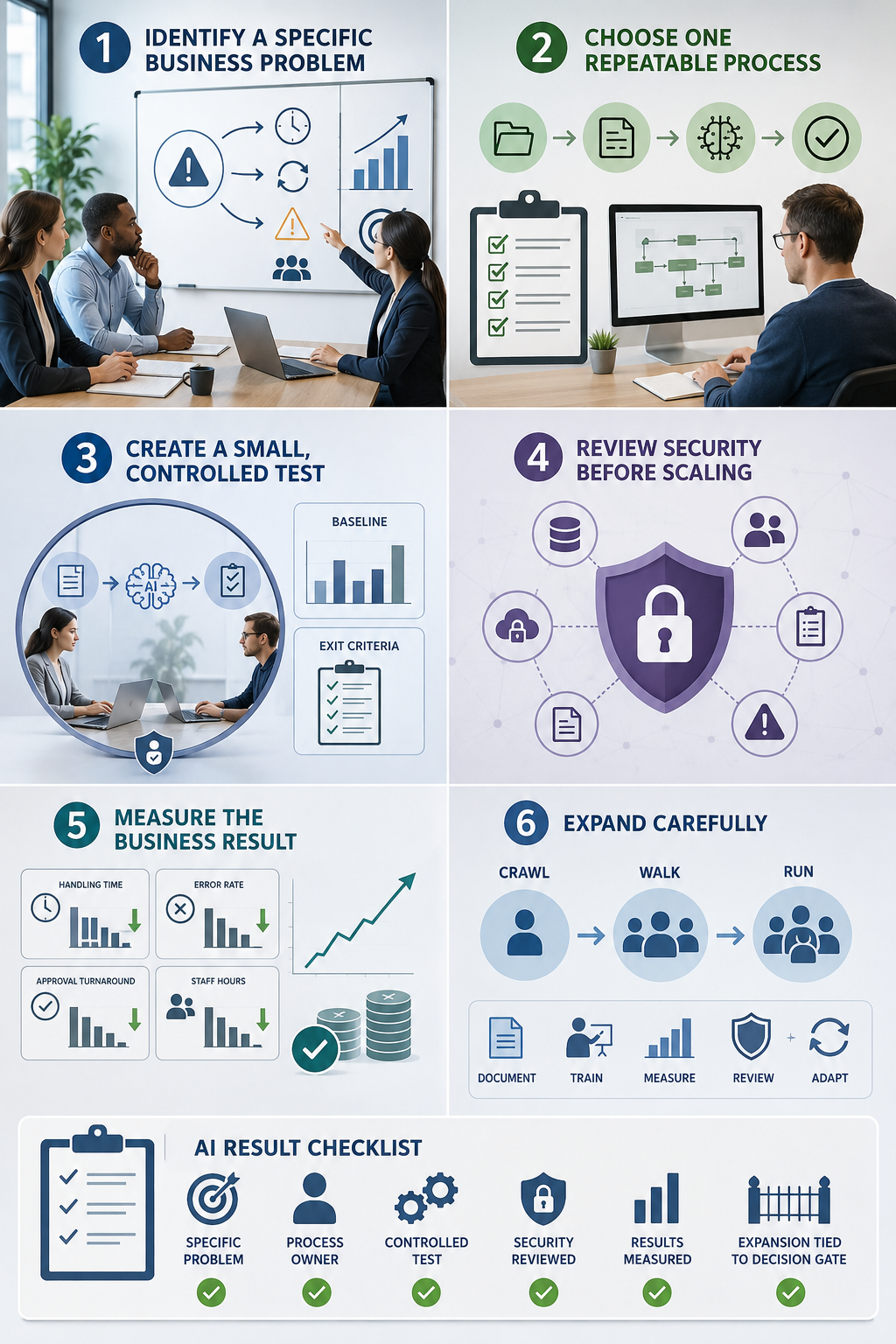
AI adoption does not have to be complicated. For most small businesses, the best approach is to start with practical, low-risk use cases.
A small business might begin by using AI to:
- Create first drafts of marketing content
- Summarize customer feedback
- Generate follow-up emails
- Organize frequently asked customer questions
- Review expense patterns
- Improve website or ad copy
- Automate appointment reminders
- Speed up internal reporting
The goal is not to replace people. The goal is to free up time, reduce busywork, and help the team focus on higher-value work.
Over time, these small improvements can add up to real savings.
AI Readiness Matters
The businesses that benefit most from AI will be the ones that build good habits early. That means learning which tools are useful, training employees, improving data quality, and setting simple rules for responsible use.
Small businesses should think about:
- What repetitive tasks take the most time?
- Where do errors or delays happen most often?
- What customer questions come up repeatedly?
- What data does the business already collect?
- Which tools are already included in existing software subscriptions?
- What information should not be entered into public AI tools?
Starting now gives small businesses time to experiment carefully instead of rushing later when competitors, costs, or customer expectations force the issue.
AI Can Help Offset Rising Costs
Small businesses are already dealing with higher costs in labor, supplies, equipment, insurance, technology, and operations. If AI infrastructure costs continue rising, those pressures could eventually affect the price of business software, electronics, vehicles, medical devices, telecom systems, and other tools companies depend on.
That is why AI should not be viewed only as another technology expense. Used correctly, it can become a cost-control strategy.
If AI helps a small business save time, reduce waste, improve customer retention, avoid errors, or make better purchasing decisions, it can help protect profitability in a higher-cost environment.
The Bottom Line
AI is quickly becoming part of the everyday business landscape. Small businesses that start learning and using AI now can build efficiency, improve customer service, and compete more effectively without needing enterprise-level budgets.
The best first step is not a massive investment. It is identifying one or two areas where AI can save time or improve results, testing simple tools, and building from there.
For small businesses, the cost of waiting may not just be higher technology prices. It may be lost time, slower operations, and missed opportunities to compete with companies that started earlier.

.png)