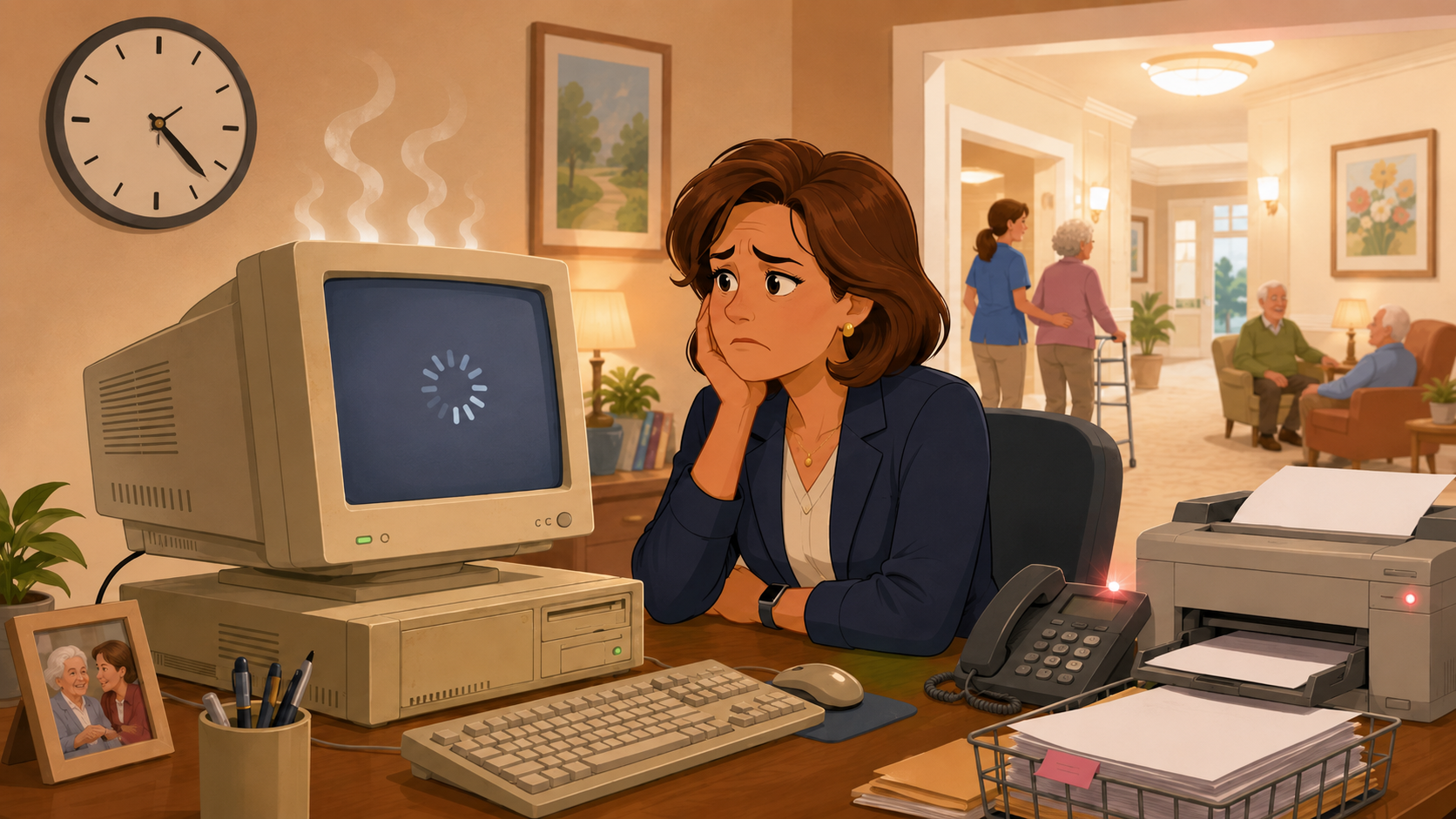
Most people treat outdated technology like a favorite sock with a hole in it.
It is clearly past its prime, but not quite bad enough to throw away.
You notice it here and there. Maybe it takes forever to send a simple email. Maybe a computer freezes right when someone is trying to update a resident note. Maybe staff have learned that one system needs to be restarted every morning before it works the way it should.
It is frustrating, but it may not feel urgent.
So the team works around it.
They wait. They restart. They try again. They call someone over. They lose a few minutes here and there.
But those few minutes are not free.
In a senior care or assisted living community, outdated technology does more than slow people down. It quietly pulls time, money, focus, and energy away from the work that matters most.
At some point, that old tech is no longer saving you money.
It is costing you every single month.
Outdated Systems Have Hidden Costs
Holding onto older systems can feel like the careful choice.
After all, if the computer still turns on, the server still runs, or the software still opens, why replace it?
That thinking makes sense on the surface. Senior care leaders are used to making every dollar count. You have staff, residents, families, vendors, compliance needs, and rising operating costs all competing for attention.
But older technology does not just sit quietly in the background.
It starts creating costs that are easy to miss.
Energy use creeps up because older equipment works harder to keep up. It can use more power, run hotter, and put extra strain on everything around it.
Then there is the cost of lost time.
A slow login here. A frozen screen there. A file that takes too long to open. A printer that only works after someone restarts it twice.
None of these problems may seem big enough to stop the day.
But together, they stretch the day out.
They pull staff away from residents. They add stress to already full schedules. They make simple tasks feel harder than they should.
And then there are the interruptions.
When systems freeze, connections drop, or devices fail at the wrong moment, your team has to stop what they are doing and figure out how to keep moving.
That is not just a technology issue.
That is an operations issue.
Your Team May Have Already Normalized the Problem
One of the clearest signs that old technology is costing you money is this:
Your staff no longer complains about it.
Not because the problem went away.
Because they have accepted it.
They know which workstation is slow. They know which device needs a restart. They know which process takes too many extra steps. They know where the workarounds are.
That may look like resilience, but it is really a warning sign.
When people get used to broken systems, inefficiency becomes part of the routine.
And in senior care, your team already carries enough.
They should not have to fight the technology too.
What Changes When the Right Systems Are Replaced
When outdated systems are addressed, the difference is often felt quickly.
Computers start when they are supposed to. Staff can log in without delays. Systems respond faster. Temporary fixes stop becoming part of the daily routine.
The day feels smoother.
Your team spends less time waiting and more time working.
Energy use can drop as newer, more efficient equipment replaces older devices. Downtime becomes less common. Frustration goes down.
Most importantly, your technology starts supporting your care team instead of slowing them down.
That does not mean replacing everything at once.
It means knowing what is still serving you, what is costing you, and what needs attention first.
You Do Not Need to Guess
Many senior care leaders know something is wrong, but they are not sure where to start.
That is completely understandable.
You should not have to become a technology expert just to know whether your systems are helping or hurting your facility.
That is where the right IT partner can make things clear.
We can help identify which systems are costing more than they are worth, which upgrades should happen now, and which items can wait. We recommend practical, right-sized improvements instead of unnecessary replacements.
Then we help manage the transition so your team is not left trying to figure it out alone.
Because the goal is not just newer technology.
The goal is a smoother day, fewer interruptions, better use of your budget, and more time for your team to focus on residents.
Is It Time for a Change?
If your systems are slow, if issues keep coming back, or if your staff has built daily workarounds just to get through the day, you are already paying for outdated technology.
The only question is how much longer you want to keep paying for it.
Old systems rarely fix themselves.
They usually keep costing you through lost time, higher bills, repeated interruptions, and staff frustration.
As your IT partner, we help you stop overpaying for technology that is no longer pulling its weight.
We help you build a clear plan, replace what makes sense, and maintain your systems going forward so you do not end up in the same place again.

.png)