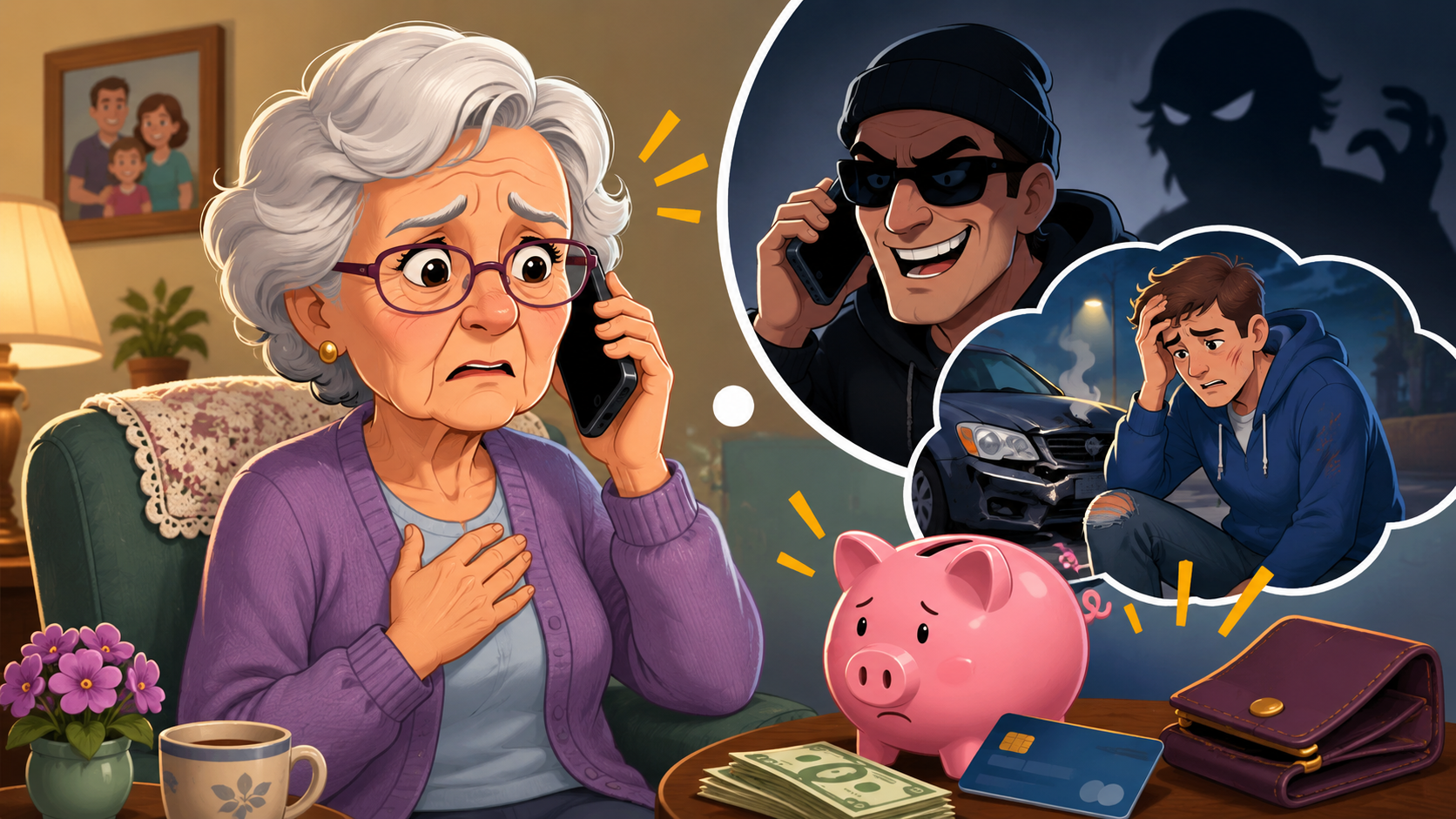
A grandparent scam is when a scammer pretends to be a family member, often a grandchild, and asks for money. The scammer may say there is an emergency and that they need help right away.
The goal is to make you feel scared, rushed, or worried so you act before you have time to check whether the story is true.
How These Scams Usually Work
A scammer may contact you by phone, email, text message, or social media. They may pretend to be:
A grandchild or family member
A police officer
A lawyer
A hospital worker
Someone “helping” your loved one
They may say your loved one is in trouble and needs money immediately. For example, they may claim there has been an accident, an arrest, a medical emergency, or a travel problem.
Warning Signs to Watch For
Be careful if someone contacts you unexpectedly and says a family member is in trouble.
Common warning signs include:
The message or call comes as a surprise.
The person asks for money right away.
They ask for payment by cash, gift cards, wire transfer, or another hard-to-trace method.
They tell you not to tell anyone else in the family.
They pressure you, threaten you, or try to scare you.
They say their phone is broken or they are calling from a new number.
They may sound upset or rushed. That is part of the trick. Scammers want you to react quickly instead of calmly checking the facts.
What to Do If You Think It Might Be a Scam
The most important thing is to pause.
Do not send money.
Do not give out personal information.
Do not share bank details, passwords, or account numbers.
Hang up the phone or stop replying to the message. Then contact your grandchild or another family member using a phone number you already know is real.
You can say:
“I got a call saying you were in trouble. Are you okay?”
You can also call another trusted relative to check the story. A real emergency can be verified. A scammer will usually try to stop you from checking.
Make a Family Safety Plan
One simple way to prepare is to create a family “password” or secret question.
For example, your family could agree on a word or phrase that only close family members know. If someone calls claiming to be a grandchild in trouble, you can ask for the family password.
You can also ask a question only the real person would know, such as:
“What was the name of your first pet?”
“What did we eat at your last birthday dinner?”
“What street did you grow up on?”
Do not ask questions that could be answered from social media, such as a birthday, school name, or pet name if those details are posted online.
Protect Your Information Online
Scammers may look online for personal details to make their story sound believable. Your online information is sometimes called your online footprint. This means the information about you that appears on websites, social media, or public pages.
To protect yourself:
Use strong privacy settings on social media.
Do not accept friend requests from people you do not know.
Avoid posting too many personal details, such as travel plans, family names, addresses, or phone numbers.
Be careful about quizzes or posts that ask personal questions. Some of those answers may help scammers guess passwords or security questions.
Common Stories Scammers Use
Scammers often use stories that sound urgent. They may say your loved one:
Needs bail money to get out of jail
Is stranded while traveling
Needs money for a medical emergency
Has a broken phone and is using a new number
These stories may sound believable, but the safest step is always the same: stop, check, and verify before sending anything.
When to Report a Scam
Report the scam if someone tries this with you, even if you did not send money. Reporting can help protect other people.
You can contact your local police or your country’s anti-fraud reporting centre. If money was sent, also contact your bank or payment company right away.
A Helpful Reminder
Scammers want you to feel rushed. You are allowed to slow down.
A real family member will understand if you take a few minutes to check the facts. A scammer will push you to act immediately.
When in doubt, hang up and call a trusted family member directly.
Credit: Based on information from Cyber-Seniors, Cyberseniors.org.

.png)